
How to Measure Hat Size Correctly: The Definitive Step-by-Step Guide for a Perfect Fit
Finding the perfect hat starts with knowing your correct hat size. Whether you’re shopping for a cowboy hat, fedora, baseball cap, sun hat, or beanie, proper sizing ensures maximum comfort, better style, and a secure fit. Unfortunately, many people guess their hat size and end up with hats that are either too tight or too loose.
In this comprehensive guide, you’ll learn exactly how to measure your hat size, understand hat sizing charts, identify your head shape, and avoid common sizing mistakes. By the end, you’ll have everything you need to confidently purchase hats online or in-store.
Why Hat Size Matters
A properly fitted hat does more than complete your outfit—it affects comfort, appearance, and functionality.
Benefits of Wearing the Correct Hat Size
- Improved comfort throughout the day
- Better overall appearance
- Reduced pressure points and headaches
- Increased stability during outdoor activities
- Greater confidence when purchasing hats online
Problems Caused by Incorrect Hat Sizing
A hat that is too small may:
- Cause headaches
- Leave red marks on your forehead
- Feel uncomfortable after prolonged wear
A hat that is too large may:
- Slide over your eyes
- Blow off easily in windy conditions
- Require constant adjustment
Taking a few minutes to measure your head correctly can save you time, money, and frustration.
Tools You’ll Need to Measure Your Hat Size
Before you begin How to Measure Hat Size, gather the following items:
Essential Tools
- Flexible measuring tape
- String or ribbon (if no measuring tape is available)
- Ruler or measuring stick
- Mirror (optional)
Preparation Tips
For the most accurate measurement:
- Measure on dry hair
- Remove bulky accessories
- Wear your hair as you normally would under a hat
- Stand naturally and relax
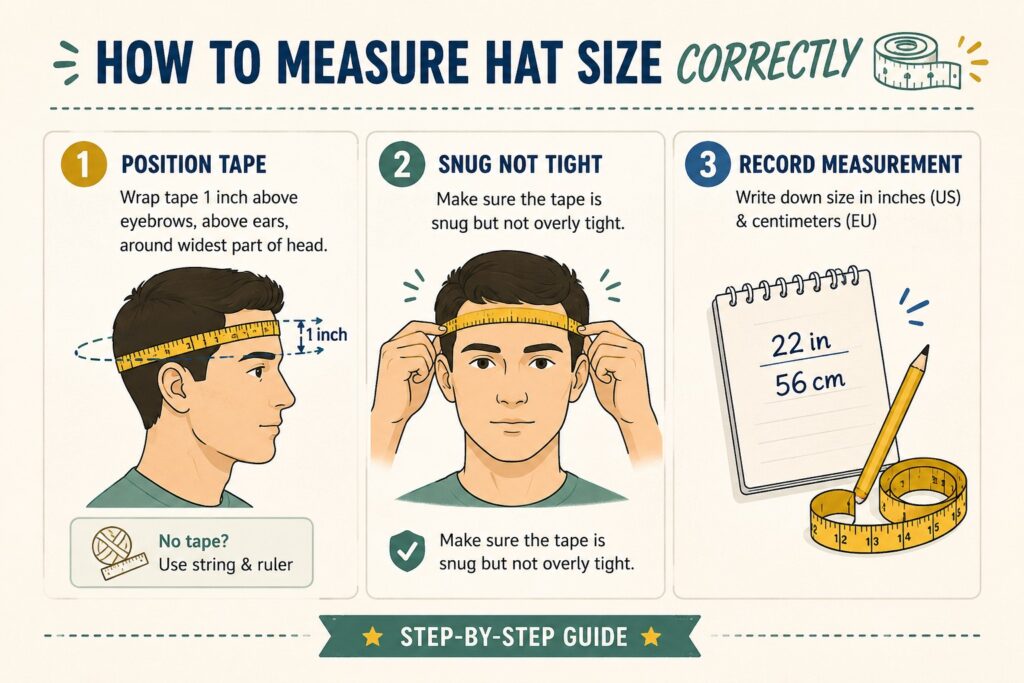
Step-by-Step Guide: How to Measure Hat Size Correctly
Measuring your hat size is simple when done correctly.
Step 1: Locate the Correct Measuring Position
Place the measuring tape around the widest part of your head.
The tape should sit:
- About ½ inch above your eyebrows
- Slightly above your ears
- Across the middle of your forehead
This is where most hats naturally rest.
Step 2: Wrap the Measuring Tape Around Your Head
Wrap the tape completely around your head while keeping it level.
Important tips:
- Do not pull the tape too tightly
- Avoid leaving it too loose
- Ensure it feels comfortably snug
Think about how you want your hat to fit when taking the measurement.
Step 3: Record Your Measurement
Read the measurement where the tape overlaps.
Record the result in:
- Inches
- Centimeters
For accuracy, repeat the process two or three times and use the average measurement.
Step 4: Determine Your Preferred Fit
Different people prefer different fits.
Snug Fit
- Secure feel
- Minimal movement
- Popular for active wear
Standard Fit
- Comfortable everyday fit
- Most commonly recommended
Relaxed Fit
- Slightly looser feel
- Preferred for casual hats and warm-weather wear
How to Measure Hat Size Without a Measuring Tape
Don’t have a measuring tape? No problem.
Using String or Ribbon
- Wrap a non-stretch string around your head.
- Mark where the ends meet.
- Lay the string flat.
- Measure it with a ruler.
The resulting length equals your head circumference.
Avoid These Mistakes
- Using stretchy materials
- Measuring too high on the head
- Pulling the string too tightly
- Forgetting to measure multiple times
Hat Size Conversion Chart
Use your head circumference to determine your hat size.
| Head Circumference (CM) | Head Circumference (IN) | Hat Size | General Size |
| 54–55 cm | 21.25–21.65 in | 6¾–6⅞ | Small |
| 56–57 cm | 22.04–22.44 in | 7–7⅛ | Medium |
| 58–59 cm | 22.83–23.23 in | 7¼–7⅜ | Large |
| 60–61 cm | 23.62–24.01 in | 7½–7⅝ | XL |
| 62–63 cm | 24.40–24.80 in | 7¾–7⅞ | XXL |
Always check the manufacturer’s sizing chart before How to Measure Hat Size, as sizing can vary slightly between brands.
How a Properly Fitted Hat Should Feel
Many people focus only on measurements, but comfort is equally important. Always follow the instructions and learn How to Measure Hat Size before you go for buying online.
A properly fitted hat should:
- Sit securely without squeezing your forehead.
- Stay in place when you bend forward.
- Leave no deep pressure marks after removal.
- Feel balanced across your head rather than tight in one area.
- Remain comfortable for several hours of wear.
If a hat causes headaches, excessive pressure, or red marks, it is likely too small. If it shifts easily in the wind or slides over your eyes, it is probably too large.
The ideal hat should feel secure enough to stay in place while remaining comfortable enough that you forget you’re wearing it.
Understanding Head Shape: The Secret to a Better Hat Fit
Many people assume head circumference is the only factor that matters. However, head shape can significantly affect how a hat fits.
Even when two people have the same head circumference, they may require different hat shapes.
Round Oval Head Shape
Characteristics:
- Similar width and length
- Common among many wearers
- Fits most standard hat designs
People with round oval heads typically experience fewer fitting issues because most hats are manufactured using standard hat blocks.
Long Oval Head Shape
Characteristics:
- Longer from front to back
- Narrower from side to side
- Common among cowboy hat and fedora wearers
People with long oval heads may experience pressure on the forehead and back of the head when wearing standard hats.
Why Head Shape Matters
A hat that matches your head shape distributes pressure evenly and feels more comfortable.
This is particularly important for:
- Cowboy hats
- Fedoras
- Felt hats
- Dress hats
- Premium handcrafted hats
Understanding your head shape can dramatically improve comfort and fit, lets understand How to Measure Hat Size.
Measuring Hat Size for Different Hairstyles
Your hairstyle can affect your measurement more than you might think.
Long Hair
Measure your head while wearing your hair the way you normally wear it under a hat.
If you frequently wear ponytails or buns, consider how they affect fit.
Thick or Curly Hair
Avoid compressing your hair excessively during measurement.
Natural volume can influence how a hat sits on your head.
Braids or Protective Styles
Measure with the hairstyle you plan to wear most often.
Protective styles can significantly increase head circumference.
Shaved or Buzz-Cut Hairstyles
People with very short hair may prefer a slightly smaller fit because there is less hair volume beneath the hat.
Measuring for Different Types of Hats
Different hat styles fit differently.
Cowboy Hats
Cowboy hats require precise sizing because they are structured and less adjustable.
A proper fit should feel secure without creating pressure points.
Baseball Caps
Adjustable baseball caps offer flexibility.
Fitted baseball caps require accurate measurements similar to cowboy hats.
Fedora Hats
Fedoras should sit comfortably above the ears and remain balanced on the head.
Head shape plays an important role in fedora comfort.
Beanies
Beanies are generally more forgiving due to their stretchable materials.
However, knowing your head size still helps ensure comfort.
Sun Hats
Sun hats should fit securely enough to stay in place during outdoor activities while remaining breathable and comfortable.
Common Hat Sizing Mistakes
Avoid these common errors when measuring your hat size.
Measuring Too High
Always measure where the hat naturally sits.
Pulling the Tape Too Tight
This often results in purchasing a hat that feels uncomfortable.
Measuring Only Once
Take multiple measurements for accuracy.
Ignoring Brand Size Charts
Sizing standards vary between manufacturers.
Forgetting About Hairstyles
Hair volume can significantly affect fit.
What to Do If Your Hat Is Too Large
A slightly oversized hat is usually easier to fix than one that is too small.
Solutions include:
- Hat sizing tape
- Foam inserts
- Sweatband cushions
- Professional resizing services
Many hat enthusiasts intentionally size up and use sizing tape for a customized fit.
These adjustments can improve comfort without permanently altering the hat.
What to Do If Your Hat Is Too Tight
If your hat feels tight:
- Confirm your measurement.
- Wear the hat briefly to determine whether it loosens naturally.
- Use a professional hat stretcher if appropriate.
- Exchange for the next size up when possible.
Never force-stretch delicate materials, as this can damage the hat and shorten its lifespan.
When in doubt, sizing up is usually the safer option.
Expert Buying Tips for Ordering Hats Online
Buying hats online can be convenient, but sizing mistakes are common so, better you go through the guide on How to Measure Hat Size.
Before purchasing online:
- Measure your head twice.
- Compare your measurement to the brand’s specific size chart.
- Read customer reviews regarding fit.
- Check return policies.
- Consider seasonal changes if wearing hats for extended periods.
Because sizing can vary slightly between brands, always rely on measurements rather than assuming your usual size will fit perfectly.
Frequently Asked Questions
How do I know if my hat size is correct?
A correctly sized hat should feel secure without causing pressure points. It should stay in place during normal movement while remaining comfortable for extended wear.
What is the average hat size for men?
The average men’s hat size typically falls between 7 and 7⅜, which corresponds to approximately 56–59 centimeters.
What is the average hat size for women?
Most women’s hat sizes range between 6¾ and 7¼, or approximately 54–58 centimeters.
Should a hat be tight or loose?
A hat should fit snugly but comfortably. It should not leave deep marks on your forehead or move excessively during normal activities.
How often should I measure my hat size?
You should remeasure your head if you experience significant weight changes, hairstyle changes, or if several years have passed since your last measurement.
Can I measure my hat size with a phone?
While some apps claim to estimate head size, a flexible measuring tape or string-and-ruler method remains the most accurate option.
Why do hats of the same size fit differently?
Fit differences can result from:
- Brand sizing variations
- Head shape differences
- Material thickness
- Sweatband construction
- Crown design
What happens if I buy the wrong hat size?
A hat that is too small may cause discomfort and headaches, while a hat that is too large may slide around and feel unstable.
Is it better to size up or size down in hats?
Most hat experts recommend sizing up if you fall between sizes because larger hats can be adjusted more easily than smaller hats.
Can head size change over time?
Yes. Weight fluctuations, aging, hairstyles, and certain medical conditions can slightly affect head circumference.
Do cowboy hats fit differently from baseball caps?
Yes. Cowboy hats generally require more precise sizing because they are structured and less adjustable than most baseball caps.
What is the most accurate way to measure hat size?
The most accurate method is to wrap a flexible measuring tape around the widest part of your head, approximately ½ inch above your eyebrows and ears.
Can I measure hat size without a measuring tape?
Yes. Use a non-stretch string, wrap it around your head, mark the overlap point, and measure the length with a ruler.
Why does my hat leave marks on my forehead?
Light impressions are normal, but deep marks usually indicate that the hat is too small or incompatible with your head shape.
Do hat sizes vary between brands?
Yes. Manufacturing differences and sizing standards vary, so always consult the brand’s size chart before purchasing.
Final Thoughts: Measure Once, Wear with Confidence
Learning how to measure hat size correctly is one of the simplest ways to improve comfort, style, and confidence when wearing hats. By using a flexible measuring tape, understanding your head shape, considering your hairstyle, and consulting accurate size charts, you can find a hat that fits perfectly every time.
Whether you’re shopping for a cowboy hat, fedora, baseball cap, or sun hat, taking a few extra minutes to measure properly will help you avoid costly sizing mistakes and ensure your next hat feels as good as it looks.
You may like to read this also: The Ultimate guide to Shop Disco Cowboy Hat